09 AUG 2026

Clinical Pilates for Ankle Stability: The Missing Piece in Injury Prevention
When people think about preventing ankle sprains, they usually think about strength — stronger calves, stronger ankles. Strength matters, but it’s only half the picture. The other half is proprioception: your ankle’s ability to sense its position and react instantly to uneven ground, a sudden change in direction, or a bad landing. This is exactly what gets lost after a sprain, and exactly what generic gym strengthening often fails to retrain.
This is where clinical Pilates does something a standard strength program doesn’t.
Why Pilates trains ankle stability so effectively
Research on proprioceptive training is clear: it significantly reduces the incidence of ankle sprains in both athletic and general populations. Separately, studies looking specifically at Pilates have found measurable improvements in static balance and ankle joint proprioception after a structured program.
The reason Pilates works so well for this is in the method itself:
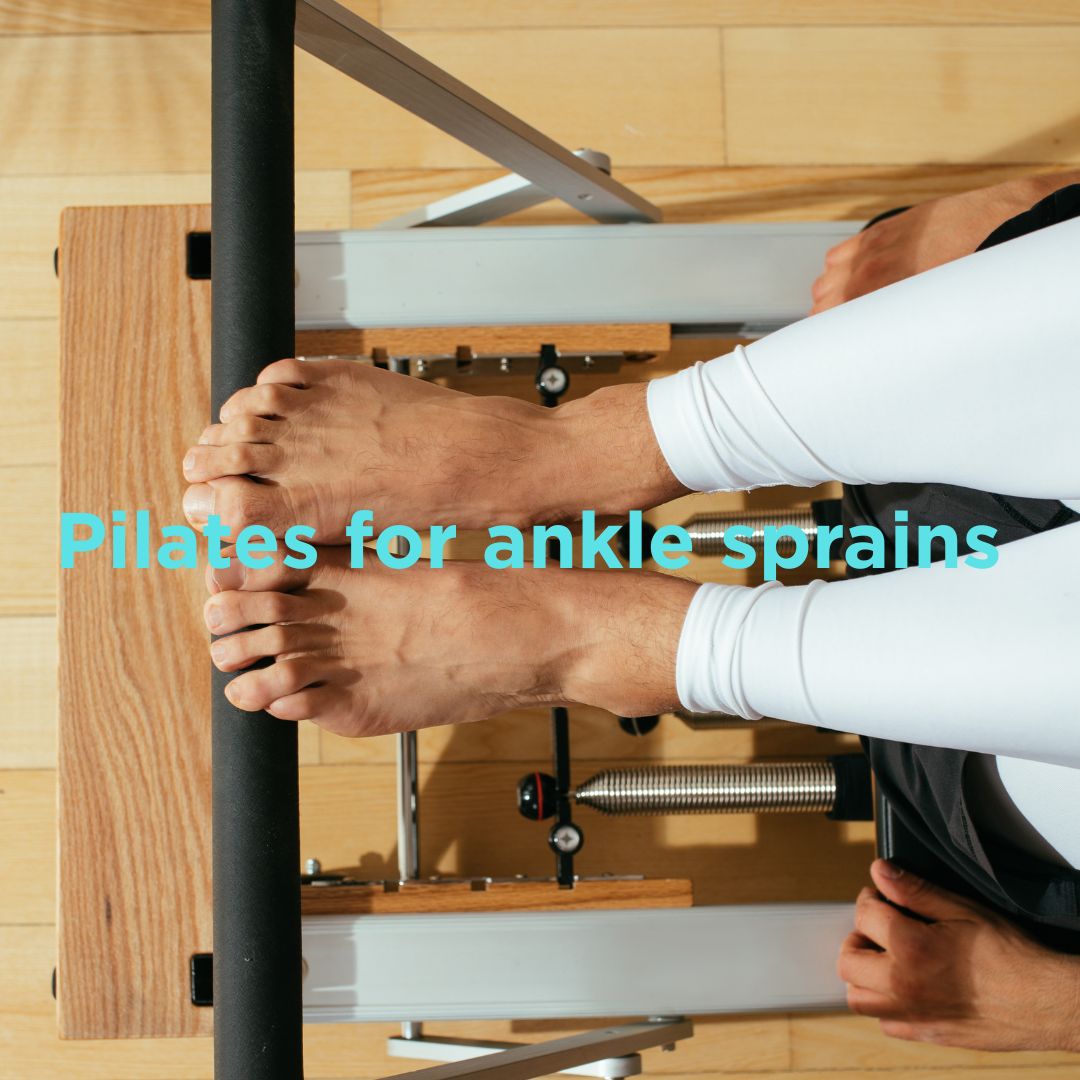
Controlled, multi-directional loading. Reformer footwork loads the ankle and foot from angles and resistances that standing exercises alone don’t replicate.
Single-leg work is built in, not bolted on. Balance challenges are a natural part of the Pilates repertoire, not an afterthought.
Slow, controlled tempo demands constant micro-correction — which is precisely the kind of neuromuscular feedback that rebuilds proprioception after injury.
It’s scalable. We can dial difficulty up or down within the same session, which makes it ideal both for early-stage rehab after a sprain and for injury-prevention work in athletes heading into a spring season.
What a session might include
Reformer footwork series — training the ankle and foot through a full range under spring-based resistance
Single-leg balance progressions — from stable ground to unstable surfaces (foam pad, wobble board, reformer platform)
Calf and intrinsic foot strengthening — supporting the same tendon-loading principles used in Achilles rehab
Standing dynamic control work — bridging the gap between studio-based stability and real-world movement like running, cutting, and landing
Who this is for
Anyone who has had one or more ankle sprains and wants to stop it becoming a repeat problem
Runners and spring-sport athletes building load back up after winter
Anyone managing Achilles tendinopathy who wants targeted calf and lower-leg strengthening in a controlled environment
Anyone who spends time walking on the sand at Pottsville or Cabarita Beach and wants their ankles to keep up with it
Getting started
If you’ve read the other two articles at www.pottsvillephysio.com.au and recognised yourself in either one, clinical Pilates is a genuinely effective next step — either alongside physio rehab, or as ongoing injury prevention once you’re back on your feet. Get in touch to book an initial assessment and we’ll build a plan around what your ankles actually need.