08 OCT 2026

Total knee replacement is one of the most common joint surgeries in Australia, and for people with advanced knee osteoarthritis who haven’t improved with non-surgical care, it can be life-changing. But surgery is only part of the story. How well you recover depends heavily on what happens before and after the operation.
Clinical Pilates can play a valuable role in both — helping you go into surgery stronger, and helping you rebuild strength, movement and confidence afterwards.
Important: always follow your surgeon’s and hospital physiotherapist’s guidance in the early weeks after surgery. Clinical Pilates is typically introduced once you’ve been cleared to progress your rehabilitation.
Part 1: Before surgery — why “prehab” matters
Prehabilitation means getting your body as ready as possible for surgery. Research suggests people who are stronger and more mobile before a knee replacement tend to regain function more quickly afterwards.
Prehab goals include:
Building quadriceps strength — the quads switch off significantly after knee surgery, so starting with more strength gives you a head start
Maintaining knee range — especially the ability to fully straighten the knee
Strengthening the hips and the other leg — you’ll lean on them a lot in early recovery
Improving balance — to reduce falls risk when you’re on crutches or a frame
Practising key movements — like getting up from a chair, which you’ll do many times a day after surgery
Building fitness and confidence — going into surgery feeling prepared
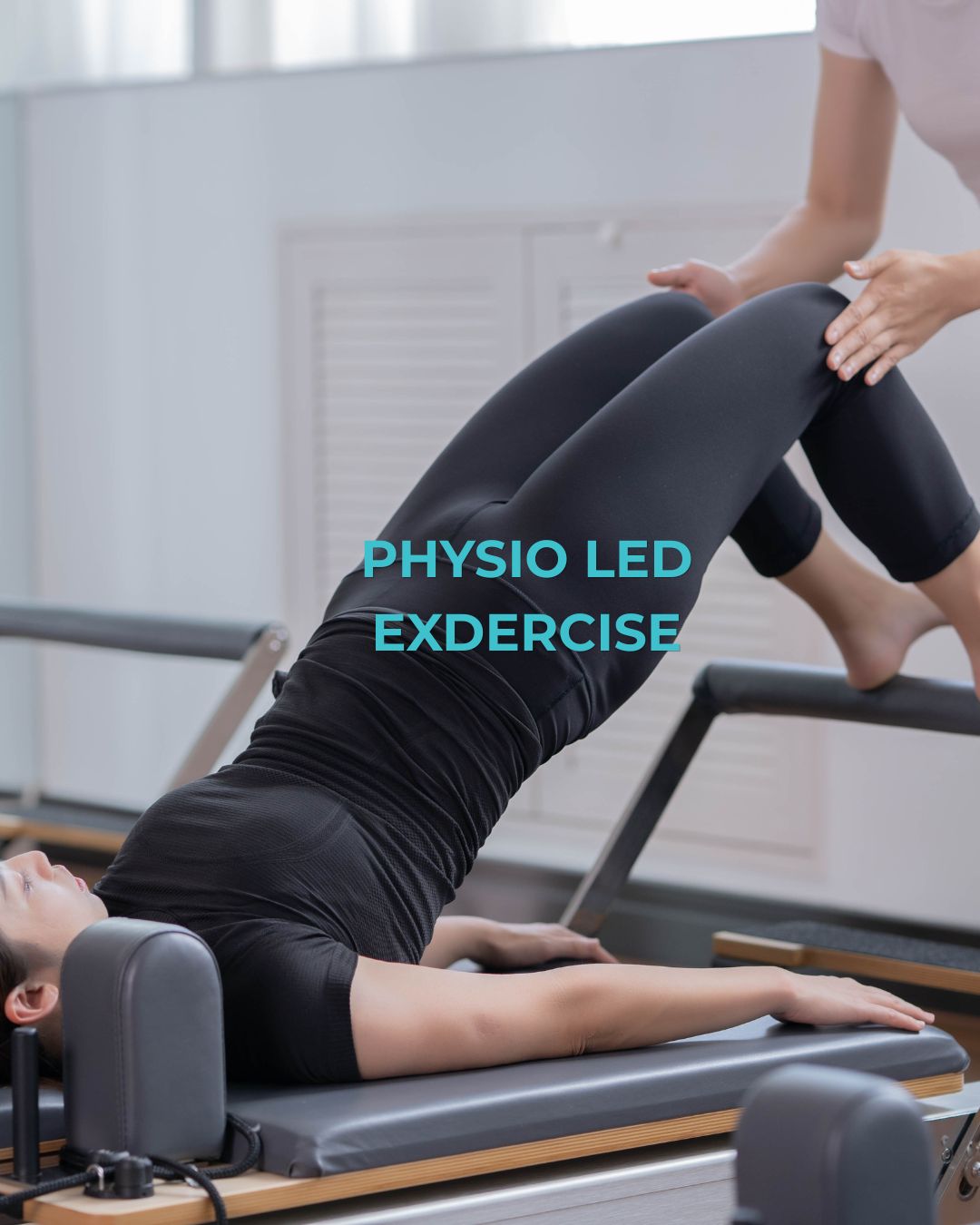
A Clinical Pilates prehab program might include reformer footwork with light springs, bridging, side-lying hip work, seated knee straightening, and supported standing balance — all tailored to what your knee can comfortably do.
And for some people, a good trial of exercise improves symptoms enough that they choose to delay surgery. Either way, the effort pays off.
Part 2: After surgery — the early phase
The first 6 weeks after a knee replacement are usually guided by your hospital and outpatient physiotherapist. The focus is on:
Managing pain and swelling
Regaining knee straightening (extension) and bending (flexion)
Re-activating the quadriceps
Walking safely, progressing off aids as appropriate
Wound care and preventing complications
This phase is about consistency with your home exercises. It’s hard work, but it’s where much of your range of motion is won.
Part 3: Rebuilding — where Clinical Pilates fits
Once your surgeon and physio are happy for you to progress (often from around 6–8 weeks, depending on your recovery), Clinical Pilates can be a great way to keep building. Many people find progress slows once formal rehab finishes, yet strength often continues to lag behind for months — sometimes years — after surgery without ongoing training.
Clinical Pilates can help with:
Progressive strength — The reformer lets us gradually increase load on the operated leg, building quadriceps, hamstring and hip strength in a controlled way.
Range of motion — Supported movements on the reformer and trapeze table can help maintain and gently improve knee bend.
Equal loading — Many people unconsciously favour their other leg for months after surgery. Pilates encourages symmetrical movement patterns.
Balance and control — Standing and single-leg work rebuilds the balance needed for stairs, uneven ground and the beach.
Confidence — Practising movements like squatting, stepping and lunging in a supported environment helps you trust your new knee.
A note on kneeling
Kneeling can feel uncomfortable after knee replacement, often because of sensitivity around the scar. Many people can kneel again over time, with padding and gradual practice, but it’s not essential. In Pilates, we can modify or substitute any kneeling exercises.
Long-term: keeping your new knee strong
A knee replacement treats the joint surface, but it doesn’t strengthen your muscles. Ongoing exercise helps you get the most from your new knee and protects your other joints too. Many of our LOFT Pilates clients continue with regular sessions for years after surgery as part of staying active and independent.
Questions & Answers
Q: When can I start Pilates after knee replacement? A: This depends on your surgeon’s guidance and your recovery. Many people begin Clinical Pilates around 6–8 weeks after surgery, once wounds have healed and they’ve been cleared to progress. We’ll liaise with your treating team where needed.
Q: Is reformer Pilates safe after knee replacement? A: Yes, when it’s supervised and tailored. The reformer’s adjustable springs make it well suited to rebuilding strength gradually after joint replacement.
Q: Can I do Pilates before my knee replacement? A: Yes, and it’s encouraged. Prehab can help you build strength and mobility before surgery, which may support a smoother recovery.
Q: Will I be able to kneel after a knee replacement? A: Many people can, though it may feel uncomfortable at first. It often improves with time and gradual practice. In Pilates, kneeling can always be modified.
Q: How long does it take to recover from a knee replacement? A: Most people are walking comfortably and back to light activities within 3 months, but strength and function can continue improving for 12 months or more — especially with ongoing exercise.
Q: My knee replacement was years ago, but my leg still feels weak. Can Pilates help? A: Yes. Strength deficits can persist long after surgery, and it’s never too late to improve them with a progressive program.
Take-Home Tips
Prehab pays off — going into surgery stronger can help you recover faster.
Prioritise straightening — full knee extension is key for normal walking.
Follow your team in the early weeks — your surgeon and physio guide the first phase.
Keep building after rehab ends — strength often lags behind for months.
Load both legs evenly — avoid favouring your non-operated side.
Make it a habit — ongoing exercise protects your new knee and your other joints.
Preparing for or recovering from knee surgery? Book a Clinical Pilates assessment at LOFT Pilates for a program tailored to your stage of recovery. Call 0266764000
Author: Melissa Macdonald, Physiotherapist & Pilates Instructor. This article is general information only and does not replace individual assessment and advice from a qualified health professional. Always follow the advice of your surgeon and treating team after surgery.